
Our Products
Premium quality pigments and chemicals for industrial excellence
Blue Pigments Range
Comprehensive range of C-P-C Blue Crude and Pigment Blue variants manufactured with precision and quality

C-P-C Blue Crude
High-purity crude pigment used as an intermediate in the production of various blue pigments.
Applications:
- Pigment manufacturing
- Chemical intermediates
- Industrial processes
Specifications:
Premium grade with consistent quality parameters
Pigment Alpha Blue 15:0
Alpha crystal form pigment offering excellent color strength and stability.
Applications:
- Paints & coatings
- Printing inks
- Plastics
Specifications:
CI Pigment Blue 15:0 - High tinctorial strength
Pigment Alpha Blue 15:1
Reddish shade alpha blue pigment with superior dispersion properties.
Applications:
- Decorative paints
- Industrial coatings
- Textile printing
Specifications:
CI Pigment Blue 15:1 - Excellent weather fastness
Pigment Alpha Blue 15:2
Alpha phase pigment with outstanding hiding power and color consistency.
Applications:
- Automotive coatings
- Powder coatings
- Printing inks
Specifications:
CI Pigment Blue 15:2 - Superior lightfastness
Pigment Beta Blue 15:3
Beta crystal form offering brilliant greenish-blue shade with excellent performance.
Applications:
- High-performance coatings
- Plastics & polymers
- Fine art materials
Specifications:
CI Pigment Blue 15:3 - Premium quality, high chroma
Sulphuric Acid - 98%
Industrial-grade sulphuric acid manufactured to the highest purity standards
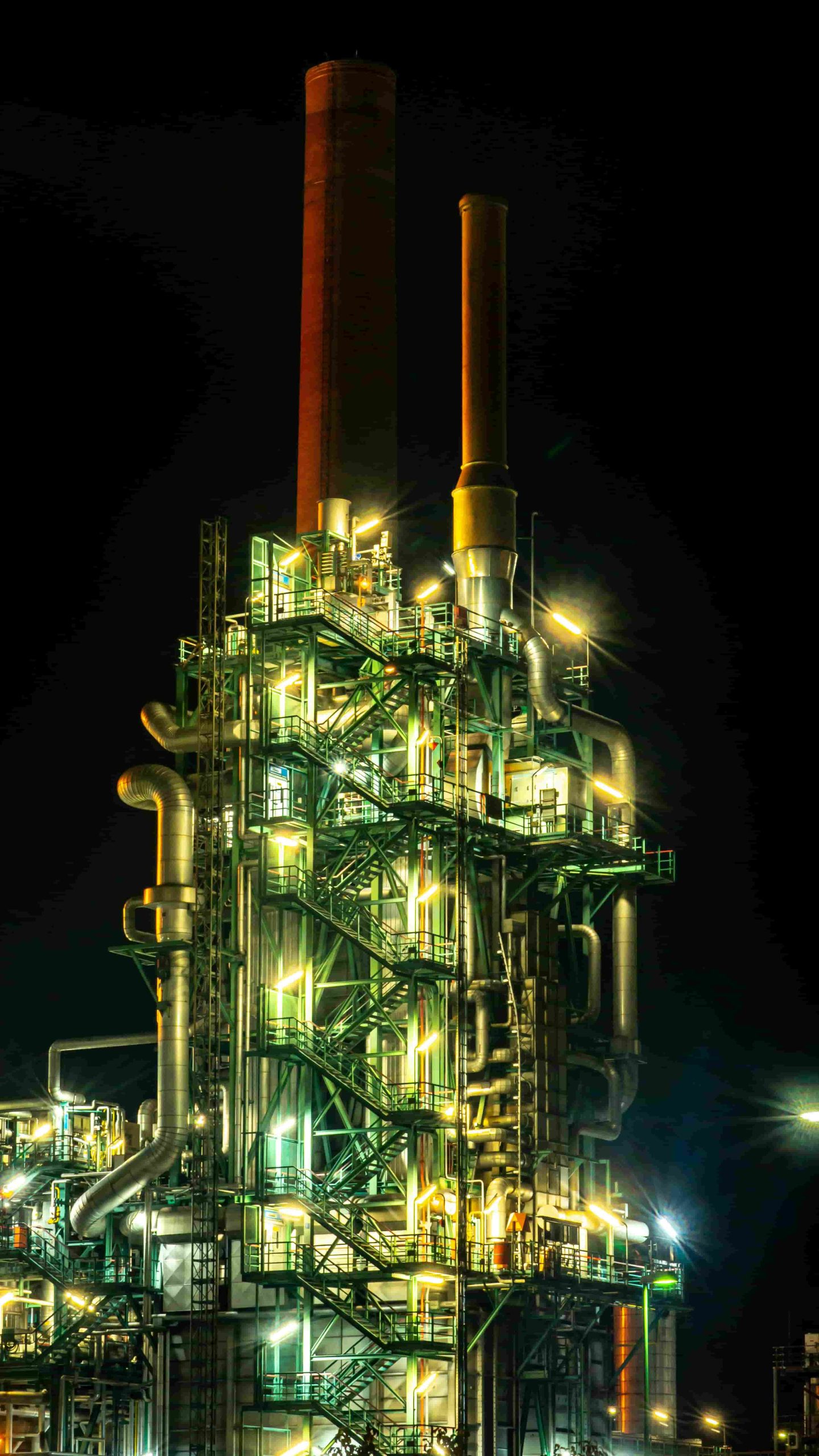
Sulphuric Acid (H₂SO₄)
High-purity sulphuric acid (H₂SO₄) at 98% concentration, manufactured under strict quality control to ensure consistent performance in demanding industrial applications.
Available Grades:
- Battery Grade
- Technical Grade
- Industrial Grade
Specifications:
Concentration: 98% (Battery Grade & Technical Grade available)
Industrial Applications:
- Chemical manufacturing
- Fertilizer production
- Metal processing
- Petroleum refining
- Water treatment
Sulphuric Acid - 70%
High-quality sulphuric acid solution formulated for applications requiring controlled acidity and safer handling compared to higher concentrations.
Sulphuric Acid (H₂SO₄)
Industrial-grade sulphuric acid (H₂SO₄) with 70% concentration, suitable for processes requiring moderate strength, improved handling safety, and stable chemical performance.
Available Grades:
- Battery Grade
- Technical Grade
- Industrial Grade
Specifications:
Concentration: 70% (Battery Grade & Technical Grade available)
Appearance: Clear, colorless to slightly yellow liquid.
Purity: Manufactured to industrial quality standards
Industrial Applications:
- Chemical manufacturing
- Fertilizer production
- Textile processing
- pH control applications
- Water treatment
Oleum 65%
Industrial-grade oleum manufactured to the highest purity standards for critical chemical and industrial applications.
Oleum 65%
Oleum 65% is a highly concentrated form of sulphuric acid containing dissolved sulfur trioxide (SO₃), designed for demanding industrial and chemical synthesis processes.
Available Grades:
- Technical Grade
- Industrial Grade
Specifications:
Free SO₃ Content: 65% ± 1% , Sulphuric Acid Equivalent: ~103% H₂SO₄ , Grades customized for high-temperature and continuous-process environments
Industrial Applications:
- Chemical synthesis
- Explosives manufacturing
- Sulfonation processes
- Dyes & pigments production
- Pharmaceutical intermediates
Oleum 23%
Controlled-strength oleum for precision-driven industrial chemical applications.
Oleum 23%
Oleum 23% provides moderate SO₃ content, making it suitable for controlled sulfonation and industrial chemical reactions requiring precision.
Available Grades:
- Technical Grade
- Industrial Grade
Specifications:
Free SO₃ Content: 23%
Composition: Sulphuric acid with sulfur trioxide
Appearance: Clear to slightly yellow liquid
Industrial Applications:
- Sulfonation reactions
- Detergent manufacturing
- Specialty chemical production
- Organic synthesis
- Industrial processing applications
Quality You Can Trust
Every product undergoes rigorous testing and quality control to ensure consistent performance and reliability.
Product-Specific Workflows
CPC Blue Manufacturing
Stage 1
- Add Ortho Chloro Aniline in H.S. Acid in chlorinated Cresol in fine reaction.
- Then add urea, Phthalic Anhydride, Cuprous Chloride and Ammonium Poly Sulphide to melt.
- Raise the temp up to $185 \text{ deg C}$.
- During the process of melt, whatever gases are evolved, such as sulphur dioxide gas is passed out of the reactor and absorbed by $10\%$ caustic lye in storage tank/reactor and then after acid wash/blow. From the water scrubber we can also absorb ammonium carbamate as a byproduct.
- After maintaining sufficient time during the batch in R.S. reactor for maximum condensation.
- That will recover $\pm 90\%$ of the solvent. And transfer the remaining crude in HDPE/L vessel containing water.
Stage 2
- Prepare water soluble crude material into dumping vessel with spent sulphuric acid (recover $60\%$ from flake fines and acid sludge).
- Maintain temperature up to $95 \text{ deg C}$ in $15,000 \text{ L}$ glass lined reactor for $3 \text{ hrs}$.
- Then filter in filter press, wash it, neutralize it, dry it, pulverize it and packed the crude material in a $50 \text{ kgs}$ bag.
Stage 3 (Pigmentation)
- After blowing the water soluble crude material which will be neutralized that contains $0.8\%$ of sulphuric acid, we will treat it with a mild solution of $\text{NaOH}$ to become neutral. Then we will exchange it with $\text{NaCl}$ in $60 \text{ deg C}$, wash.
Alpha Blue Manufacturing
Stage 1 (Wet process)
- Use Sulphuric acid ($\text{H}_2 \text{SO}_4$) in a reaction vessel. Then slowly charge Copper Powder at $50 \text{ deg C}$.
- Maintaining temperature just below $80 \text{ deg C}$. So as to dissolve it $85\%$ completely.
- The mass is stirred further for $6 \text{ hrs}$ at $80 \text{ deg C}$ and then cooled to room temp. by chilled water circulation in the jacket.
- Recycled water is then introduced as a thin slurry into the vessel slowly, taking care that the temperature does not rise above $50 \text{ deg C}$.
- The $\text{CPC}$ separator size in the required form and is filtered off.
- After filtration process, whatever reactor foam generated that contains approximately $10 \text{ to } 12\%$ of the crude, the same quantity will be used for the next reaction of Alpha Blue.
Stage 2 (Pigmentation Process)
- Wet product is charged to reactor, treated and washed with water and diluted with fresh water.
- The resultant slurry is treated with $\text{H}_2 \text{SO}_4$ for $\text{pH}$ $0.5 \text{ to } 1.0$ using ammonia solution and caustic lye and heated with condenser at $90 \text{ deg C}$ for $3 \text{ hrs}$.
- The dilute slurry is filtered and the cake is washed with required amount of fresh water.
- Then the cake is dried at $60 \text{ deg C}$ for $24 \text{ hrs}$.
- The aqueous filtrate $\text{GTS}$ goes to $\text{ETP}$. Then after it is discharged it is $650 \text{ to } 670 \text{ Kgs}$.
Beta Blue Manufacturing
Stage 1 (Milling)
- Crude $\text{CPC}$ ($\text{PB}$ $15.0$) is put into ball mill of capacity $15,000 \text{ kgs}$, add few solvents for $24 \text{ hrs}$.
- After $24 \text{ hrs}$ discharge the milled slurry for stage $2$ (pigmentation).
Stage 2 (Pigmentation)
- Charge crude milled blue into all vessels, dissolve caustic, urea, surfactants and dispersing agents. Stir up for $2 \text{ to } 3 \text{ hours}$.
- Then recover the pigment, filter the pigmented mass through filter press, wash with water till neutral $\text{pH}$. Dry the pigment cake in open flask dryer at the rate of $75 \text{ kgs}$.